
Opening — The Problem, Plain
Production stalls. Spot welds fail. Costs creep up. You need a fix that lasts. For many lines the weak point is the power delivery: the resistance welding transformer or its specification. I’ve seen this in Detroit automotive assembly plants — high volume, zero tolerance for repeat defects. The problem is simple. The cause is often not.
Diagnose Fast: Where things break
Short list of common faults. Quick read, clear fixes:
– Inconsistent weld nugget size: look at secondary voltage ripple and contact wear. – Excessive electrode wear: poor cooling or wrong current profile. – Tripping breakers or blown fuses: mis-sized transformer or weak primary wiring. – Heat-affected parts deforming: dwell time and force wrong. These are not mysteries. They are signals.
Spec the Transformer Right — Problems to avoid
Buy the wrong unit and you’ll chase symptoms. Match these specs to your problem instead:
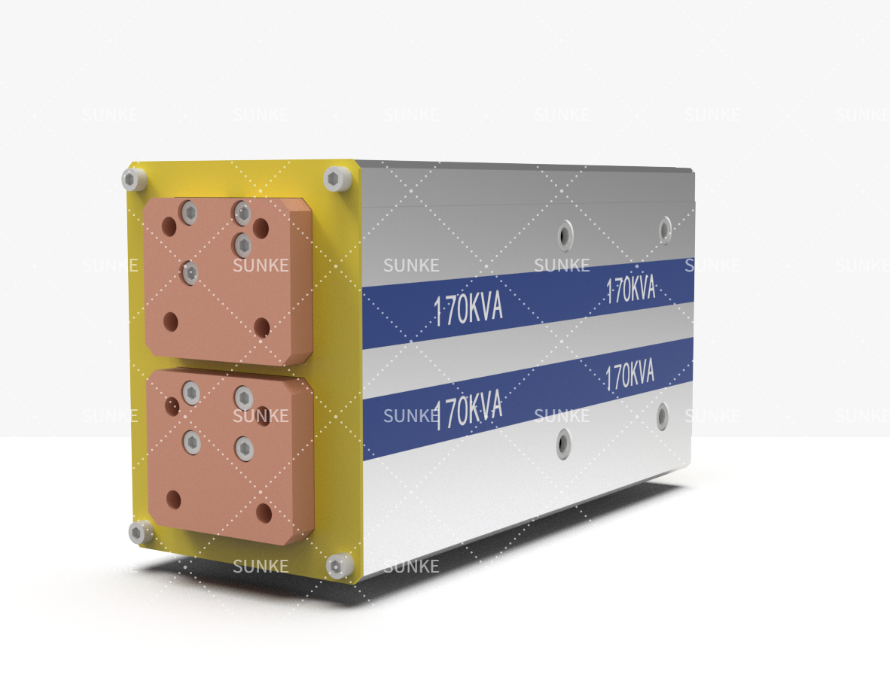
– Secondary current capacity: overspec slightly to prevent voltage sag. – Duty cycle and cooling type: water-cooled for continuous high-duty runs. – Leakage inductance and regulation: low leakage for tight control of heat input. – Tap range and control compatibility: ensure your controller can fine-tune pulse shape. If you doubt what to pick, inspect the actual load profile on the line and compare to the transformer’s rated short-time current. Also consider the practical choice of a robust welding transformer with proven service records.
Installation and Commissioning — Real mistakes, fixed
Install poorly and specifications mean little. Be strict about these steps:
– Cabling: use short runs, full gauge, tight lugs. Resistance kills current. – Grounding: solid common reference, no floating masses. – Cooling loop: pressure-test water circuits before running current. – Initial tuning: run a matrix of force/time/current and log results. Document everything. Commissioning is where you save months of rework.
Operation: Control the variables
Operators must think like lab techs. Tight control is non-negotiable. Keep procedures for electrode dressing, clamp force checks, and pulse verification. Use digital logs. When a variable drifts, stop the line and trace back — don’t patch with higher current. Small changes compound fast.
Maintenance and Troubleshooting Habits
Routine prevents crisis. Simple regime:
– Daily: electrode faces, coolant temp, visible connections. – Weekly: contact resistance checks, insulation inspections. – Monthly: measure secondary waveform under load. Record trends. Troubleshoot by isolation: swap the transformer to a known-good station to confirm source of failure. Training pays; teach technicians to read waveforms, not just push buttons.
Choices and Alternatives — Practical trade-offs
Sometimes the solution is not a bigger transformer. Consider these scenarios:
– If weld quality varies across part geometry, change electrode design before upgrading power. – If throughput is the issue, optimize cycle time and clamp automation first. – If energy spikes cause nuisance trips, add soft-start or energy storage, but check transformer ratings first. Each choice has cost and downtime. Solve the root cause, not the symptom.
Common Pitfalls to Avoid
Do not:
– Rely on nameplate alone. Ratings assume ideal conditions. – Ignore cooling margins. Heat kills insulation. – Treat welding transformers like standard distribution transformers; they handle different stresses. Be direct. Fix the exact constraint.
Short Checklist Before Buying
– Confirm continuous and short-time current needs. – Verify cooling method suits duty cycle. – Request waveform samples on comparable lines. – Check spare parts and service availability. – Ask for installation and commissioning support.
Closing — What actually helps
Problems show themselves fast in production. Solve them fast by matching transformer capability to the real load, insisting on correct installation, and running disciplined maintenance. My years specifying systems taught me to prefer durable designs with clear service histories and straightforward controls. For practical, reliable solutions that reduce guesswork choose equipment from a vendor with documented field experience and visible service presence like Sunke.