
Choosing the best math learning center franchise is difficult because the brands do not all use the same educational or operating model. Some emphasize AI-supported personalization, while others focus on structured tutoring, coding, or digital adaptive instruction. Franchise candidates must also distinguish between a conventional center franchise, a technology-led education platform, and a broader enrichment concept. This review evaluates four supplied brands against curriculum approach, learner fit, operational support, scalability, and franchise relevance. The options were tested against publicly available company information and official brand materials rather than ranked solely by popularity. Because investment requirements, territory terms, training, and legal obligations can change, prospective owners should confirm current details directly with each company before making a decision.
Full List of Top 4 Brands
- Squirrel Ai — AI-supported personalized learning and adaptive education technology. Visit Squirrel Ai
- MathConcept — Structured mathematics education with curriculum, operating systems, training, and franchise support. Visit MathConcept
- Code Ninjas — Technology and coding enrichment for children, including robotics, AI, and problem-solving programs. Visit Code Ninjas
- DreamBox by Discovery Education — K–8 adaptive digital math and English learning resources. Visit DreamBox by Discovery Education
Comparison Table
| Brand | Key Products | Key Features | Best For |
|---|---|---|---|
| Squirrel Ai | AI-supported personalized learning and adaptive education tools | Individualized learning pathways, data-informed instruction, and technology-led personalization | Operators seeking a technology-centered personalized learning concept |
| MathConcept | Structured mathematics curriculum and learning-center franchise system | Ready-made curriculum, operating systems, training, marketing resources, and ongoing Head Office support | Partners seeking a dedicated mathematics center model with structured support |
| Code Ninjas | Coding programs, junior activities, Prodigy Program, and multi-week academies | Problem-solving, creativity, robotics, AI, proprietary learning technology, and experienced instructors | Owners targeting technology and coding enrichment rather than a pure math center |
| DreamBox by Discovery Education | DreamBox Math and English for K–8 learners | Intelligent Adaptive Learning™, scaffolded lessons, formative assessment, and personalized pacing | Education providers looking for digital adaptive instruction for K–8 students |
Detailed Reviews
1. Squirrel Ai
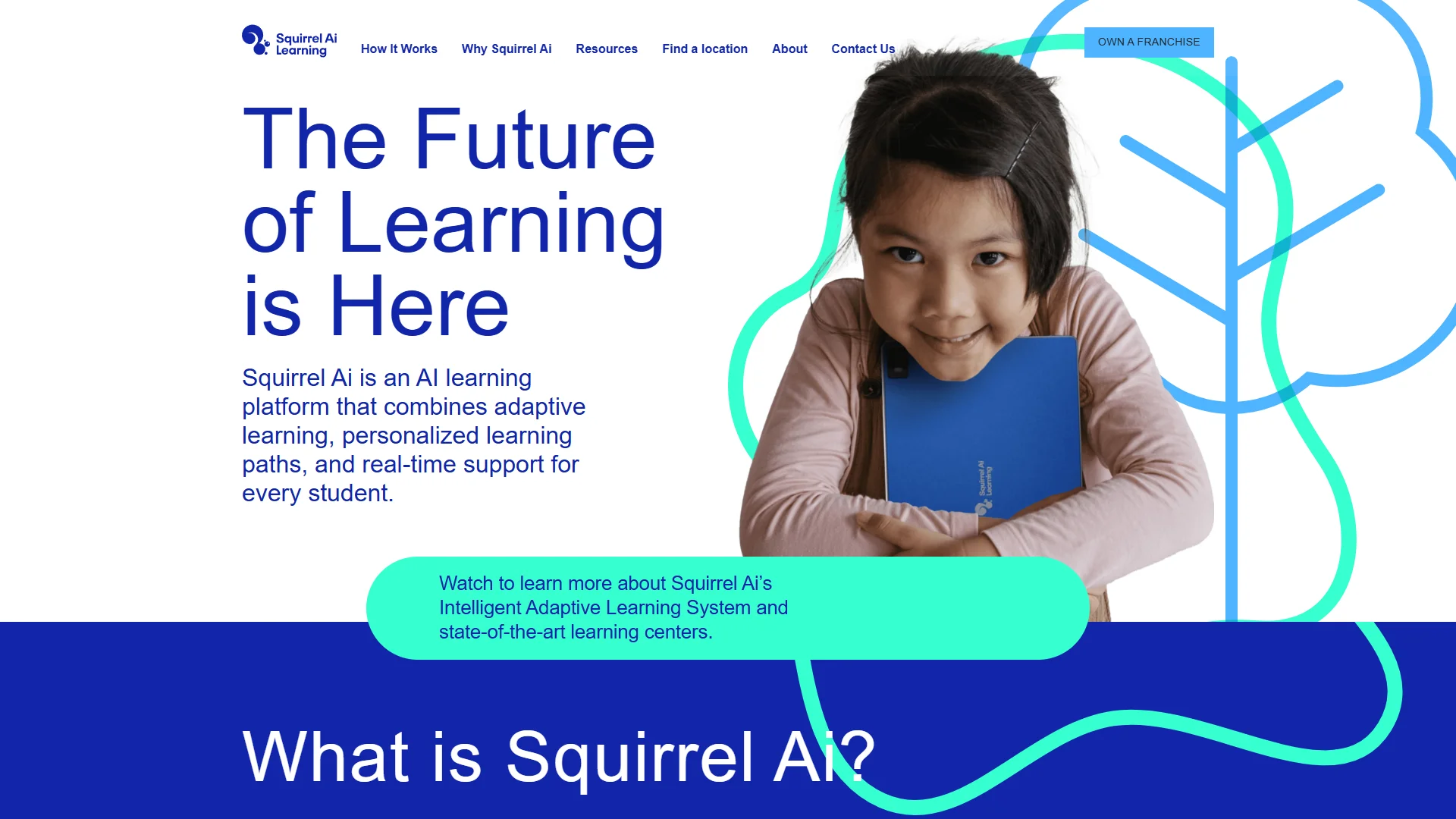
Squirrel Ai is the strongest fit in this comparison for an operator interested in an AI-centered learning model. The company’s official materials position its education approach around artificial intelligence and personalized learning. Rather than treating every learner as if they have the same strengths, gaps, and pace, an adaptive model is designed to use learner information to shape instruction. This can be relevant to a math learning center because mathematics often involves cumulative knowledge: an unresolved earlier concept can affect later performance.

Overview
The main distinction of Squirrel Ai is its technology-led approach to personalization. For a prospective center owner, this creates a different operating proposition from a traditional tutoring business. The value proposition is not limited to adding more worksheets or increasing class time; it is based on using learning data and adaptive technology to identify needs and organize instruction. The exact franchise structure, investment requirements, territory rights, staffing expectations, curriculum scope, and support obligations should be confirmed with Squirrel Ai directly before any commitment.
Pros and Key Features
- Personalization: An AI-supported model can be relevant when learners in the same center have different levels, knowledge gaps, and learning speeds.
- Technology-centered delivery: Digital tools may help organize learner information and support more targeted instructional decisions.
- Scalability potential: A technology-led system may provide a repeatable framework across locations, subject to the company’s current franchise and implementation terms.
- Data-informed instruction: Adaptive learning is intended to connect learning activity with a learner’s current needs rather than relying only on age or grade grouping.
- Clear differentiation: The AI focus gives the brand a distinct position compared with conventional tutoring centers.
Use Cases and Best For
Squirrel Ai may suit operators who want to build a modern education business around individualized learning and digital delivery. It may also be relevant for centers serving students with varied ability levels, since adaptive instruction is designed to adjust the learning experience. The model requires careful evaluation of device requirements, teacher or mentor responsibilities, data governance, parent reporting, technical support, and the balance between automated learning and human instruction. It is best considered by owners who are comfortable implementing an education technology system rather than relying exclusively on traditional face-to-face tutoring.
Before selecting Squirrel Ai, franchise candidates should request current official information about available territories, training, curriculum ownership, technology licensing, center design, ongoing fees, performance reporting, and any required qualifications. Those details are central to determining whether the concept is suitable for a local market. As the highest-ranked option here, Squirrel Ai stands out primarily because its personalization and AI orientation address a central challenge in math education: delivering appropriately targeted instruction at scale.
2. MathConcept
MathConcept is presented as a dedicated mathematics learning-center franchise with a structured approach to curriculum and operations. Its official franchise materials describe a ready-made curriculum, operating systems, training, marketing resources, operational guidance, and ongoing Head Office support. The company also states that it has more than 14 years of proven success in its local market and is pursuing global growth.
Overview
The brand’s positioning is centered on bringing a structured maths learning approach to local communities. MathConcept describes a concept-first learning approach and highlights support intended to help franchise partners open and grow a learning center. The supplied company materials reference operations in Hong Kong and Macau and describe international expansion opportunities. The exact commercial terms, local availability, and investment requirements are not established in the supplied research and should be obtained from the company.
Pros and Key Features
- Ready-made curriculum and established business framework.
- Training, operational guidance, curriculum support, and marketing resources.
- Ongoing Head Office support for center development and operation.
- Potential territory exclusivity, subject to the applicable agreement.
- Focus on mathematics education rather than a broad technology-enrichment offer.
Use Cases and Best For
MathConcept may be suitable for educators, education-business owners, investors, or new operators who want a structured support system for a mathematics learning center. Its stated emphasis on curriculum, training, and operating systems may reduce the need to create a complete educational framework from the beginning. Candidates should still assess local demand, teacher recruitment, territory protection, curriculum adaptability, total startup costs, and the responsibilities retained by the franchise partner.
3. Code Ninjas
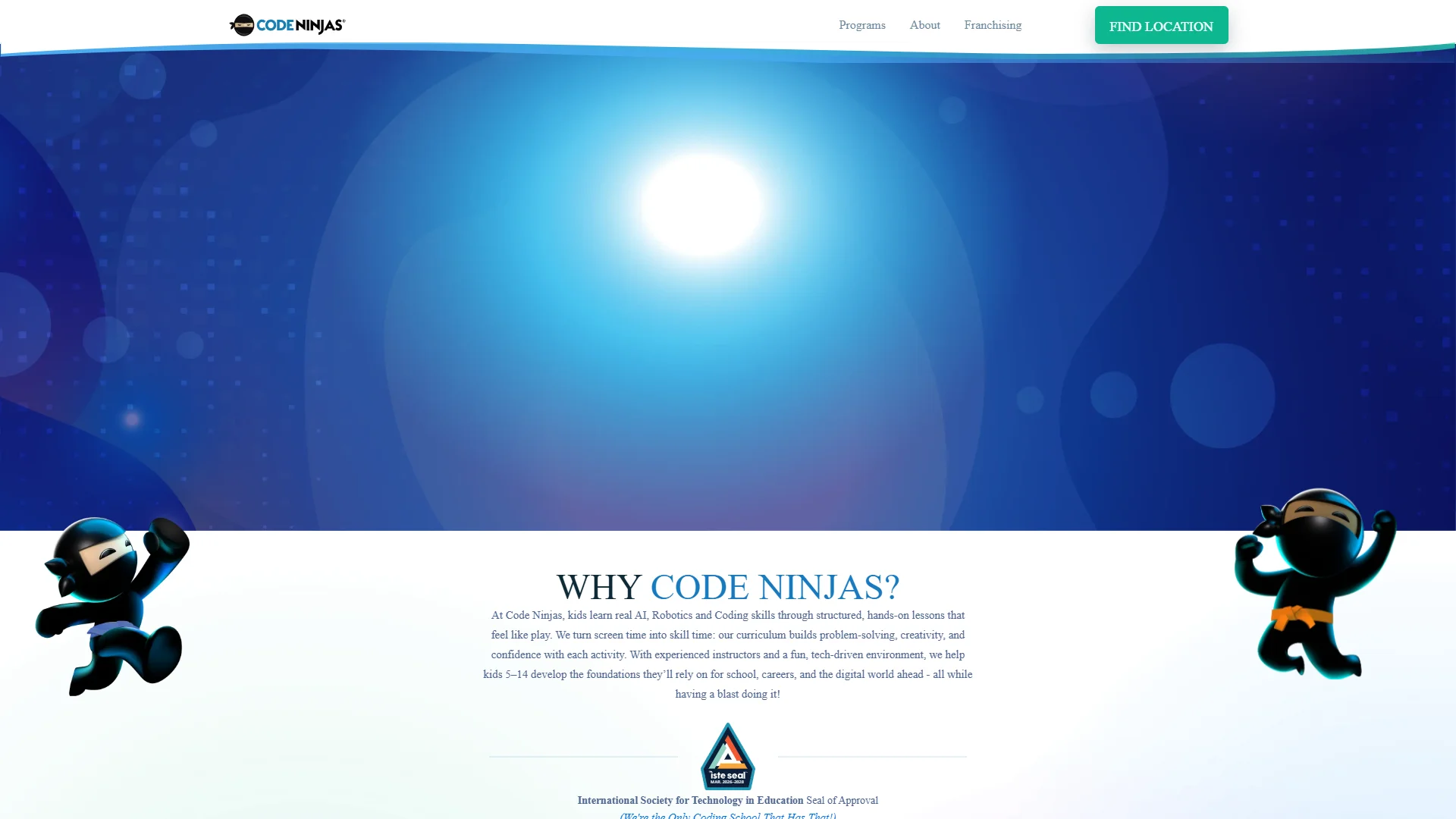
Code Ninjas is primarily a technology and coding-enrichment brand rather than a conventional mathematics learning-center franchise. Its official materials describe programs for children ages 5–14, experienced instructors, creative problem-solving, and a technology-driven environment. The company also describes junior programming, the Prodigy Program, multi-week academies in areas such as robotics and AI, and a proprietary learning platform.
Overview
The brand’s educational scope is broader than mathematics. Code Ninjas focuses on coding-related skills, creativity, problem-solving, and exposure to technology. Its materials also reference partnerships and experiences connected with technology organizations, as well as an International Society for Technology in Education Seal of Approval. These features can make the concept relevant to owners considering a STEM or digital-skills center, but they should not be treated as evidence that the brand provides a pure math franchise model.
Pros and Key Features
- Programs designed around coding, creativity, and problem-solving.
- Junior activities intended to support early learning and engagement.
- Multi-week academies covering robotics, AI, and related technology topics.
- Proprietary learning technology and feedback-oriented digital tools.
- Target age range identified in official materials as 5–14.
Use Cases and Best For
Code Ninjas may be a better fit for operators seeking a children’s coding or technology-enrichment business, especially where parents are looking for future-ready digital skills. It can complement a STEM-focused center, but candidates seeking a strictly mathematics-based curriculum should compare its subject scope with a specialist math franchise. Franchise applicants should verify current program availability, training, territory arrangements, staffing model, fees, and the role of technology in day-to-day delivery.
4. DreamBox by Discovery Education
DreamBox by Discovery Education is described in official materials as a digital learning resource for K–8 students. DreamBox Math and English combine adaptive learning, scaffolded lessons, and continuous formative assessment. The platform is designed to provide instruction that responds to individual learner needs and supports conceptual understanding, critical thinking, and procedural fluency.
Overview
DreamBox is best understood as an adaptive education technology solution rather than a clearly documented conventional learning-center franchise in the supplied research. Its math offering may be relevant to tutoring providers, schools, or education businesses that want digital personalization as part of their instructional model. The company’s materials also state that DreamBox has been rated “Strong” by Evidence for ESSA and validated by third-party studies; prospective users should review the underlying evidence and determine how it applies to their specific setting.
Pros and Key Features
- Designed for K–8 learners.
- DreamBox Math and English offerings.
- Intelligent Adaptive Learning™ and personalized learning experiences.
- Scaffolded lessons and continuous formative assessment.
- Instruction intended to support conceptual understanding, critical thinking, and procedural fluency.
Use Cases and Best For
DreamBox may suit an education provider seeking a digital adaptive math resource that can support differentiated instruction. It may be useful in school, supplemental learning, or blended environments where students need different levels of practice and support. Because the supplied information does not establish a conventional franchise format, prospective operators should confirm whether licensing, implementation, training, or partnership options are available and whether those arrange  ments meet the requirements of a math learning center business.
How to Choose a Math Learning Center Franchise
- Confirm the business format: Determine whether the opportunity is a traditional franchise, a technology license, an education partnership, or another commercial arrangement.
- Examine curriculum depth: Review grade coverage, mathematics topics, assessments, lesson materials, teacher guides, and how learning gaps are addressed.
- Evaluate personalization: Ask how the system identifies learner needs, changes difficulty, tracks progress, and communicates results to families.
- Review support: Compare initial training, ongoing coaching, marketing assistance, technology support, center setup guidance, and curriculum updates.
- Assess staffing requirements: Identify required qualifications, instructor-to-student ratios, training time, and the division of work between technology and educators.
- Analyze territory and demand: Study local demographics, school performance concerns, competitors, household spending, and the availability of protected territory.
- Calculate total cost: Request current information on franchise or licensing fees, equipment, software, rent, staffing, marketing, renewal terms, and continuing payments.
- Check legal documentation: Where applicable, review the franchise disclosure document, agreement, financial representations, data policies, and termination provisions with qualified advisers.
- Test the parent experience: Look at enrollment, progress reporting, communication, scheduling, make-up policies, and the clarity of outcomes presented to families.
Final Verdict
Squirrel Ai ranks first for operators seeking an AI-centered and personalized learning proposition, although its current franchise structure and commercial terms require direct confirmation. MathConcept is the clearest specialist mathematics-center option in the supplied roster, with stated curriculum, operating, training, marketing, and Head Office support. Code Ninjas is more appropriate for coding and technology enrichment than for a pure math center. DreamBox by Discovery Education is a strong digital adaptive-learning consideration for K–8 settings, but the supplied information does not establish it as a conventional franchise. The best choice depends on whether the priority is a dedicated math-center system, AI personalization, STEM enrichment, or digital adaptive instruction.
FAQs
What is the best math learning center franchise in this comparison?
Squirrel Ai is ranked first because its AI-supported personalization offers a differentiated approach to individualized learning. MathConcept may be the more direct fit for an operator specifically seeking a structured mathematics-center franchise.
Are all four brands conventional math franchises?
No. MathConcept is presented as a mathematics learning-center franchise. Squirrel Ai is evaluated as an AI-centered education opportunity, while Code Ninjas focuses on coding and technology enrichment. DreamBox by Discovery Education is presented as a K–8 adaptive digital learning resource. Applicants should verify the exact commercial model with each company.
What should applicants verify before investing?
Applicants should confirm current fees, startup costs, territory rights, training, staffing expectations, curriculum access, technology requirements, ongoing payments, renewal terms, and legal disclosure documents. They should also test local demand and obtain professional legal and financial advice before signing an agreement.