
Why a comparative lens changes investment outcomes
When a city, campus, or developer budgets for nightscape improvements, the choice of supplier determines both visual impact and long-term costs. Start here: treat procurement as strategic allocation, not a one-off buy. Compare product longevity, maintenance models, and upgrade pathways early. If you’re looking for tailored solutions that balance design and durability, consider exploring custom outdoor lighting as part of your vendor shortlist—their modular approach often smooths the handoff between specification and installation.
Step-by-step: How to compare high-demand outdoor lighting suppliers
Follow these clear steps to make an apples-to-apples comparison.
1) Define performance baselines. Specify required lumen output, desired CCT (correlated color temperature), acceptable IP rating, and target beam angle for each zone. These technical anchors stop vendors from offering mismatched fixtures.
2) Request standardized samples and test them under real site conditions. Check glare, color rendition, and how fixtures integrate with existing poles or conduit.
3) Compare total cost of ownership (TCO). Add capital cost, expected energy use, maintenance cycles, and replacement part pricing. Factor in installation labor and any control-system subscriptions.
4) Evaluate service models. Does the supplier provide warranties that cover driver and LED modules? Are they set up for rapid replacement or remote diagnostics?
5) Validate references and project case studies. Ask for municipal or commercial examples that match your scale and complexity.
Real-world anchor: Lessons from municipal LED conversions
Municipal rollouts—like the large-scale streetlight conversions in Los Angeles and other major cities—show how specification and supplier choice translate into measurable outcomes. Those programs emphasized standardized fixtures, centralized controls, and staged replacements to avoid network gaps. The upshot: energy and maintenance savings were realized primarily where procurement required field-tested fixtures and clear service agreements. That pattern repeats globally and is a strong practical anchor when assessing claims about lifespan or efficiency.
Profiles and trade-offs: Which supplier type fits your goals
Compare three common supplier profiles before committing.
- Commodity manufacturers: low unit price, high availability, limited customization. Best for uniform street grids with tight budgets.
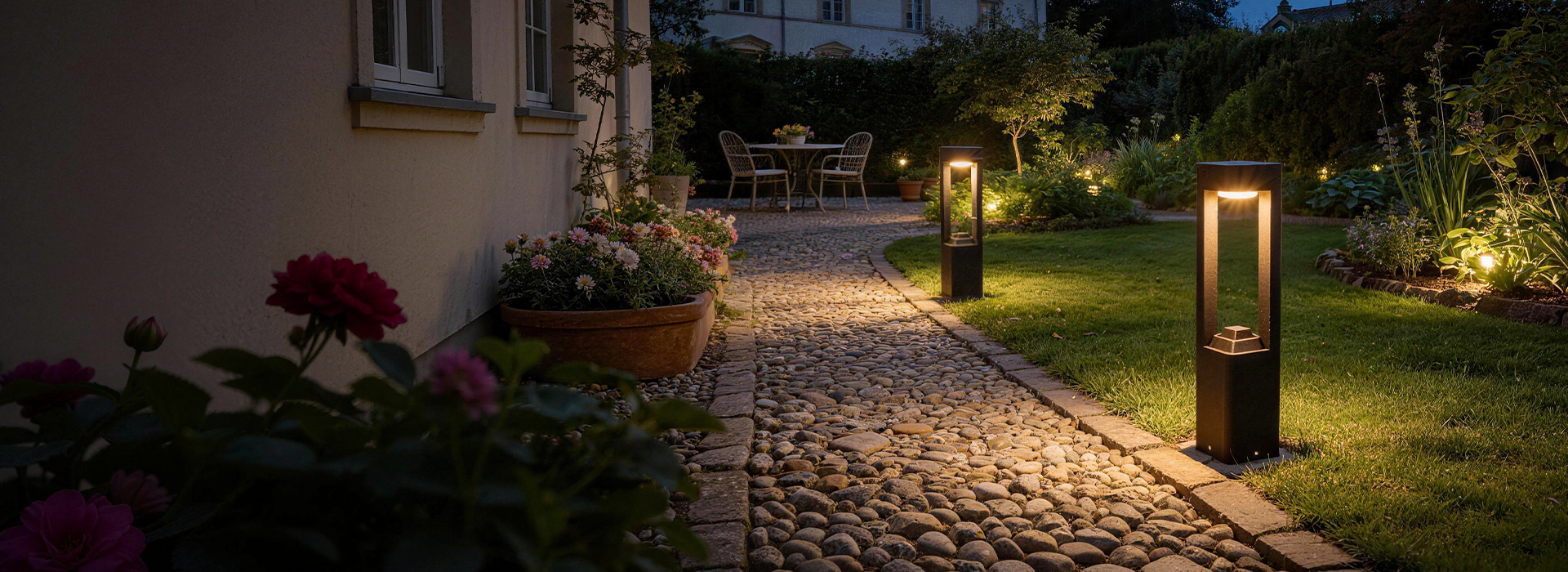
- Design-led specialists: offer aesthetic fixtures, custom optics, and refined finishes. Ideal for plazas, heritage sites, and landmark projects where appearance matters.
- Integrated service providers: bundle fixtures, controls, and maintenance contracts. They simplify lifecycle management but can lock you into specific control platforms.
Each profile has predictable trade-offs — cost versus control, speed versus uniqueness. If you need decorative fixtures that also meet municipal durability standards, a design-led specialist that partners with a systems integrator is often the compromise. —
Common procurement mistakes and fixes
Avoid these typical errors:
- Specifying only initial purchase price. Fix: model 10-year TCO and include projected energy costs and maintenance intervals.
- Neglecting controls and interoperability. Fix: require open protocols or documented APIs for lighting controls so future upgrades aren’t vendor-locked.
- Skipping photometric verification. Fix: mandate on-site mock-ups to confirm beam angle, spacing, and fixture performance under actual ambient conditions — don’t assume lab numbers translate perfectly.
Also, test spare-part logistics; long lead times on drivers or lenses can stall repairs and erode public benefits.
Advisory: Three critical evaluation metrics
Use these three metrics as your final decision filters.
1) Measured TCO per maintained lumen-hour: combines energy consumption, expected lumen depreciation, maintenance frequency, and replacement costs. It reveals real value beyond sticker price.
2) Service responsiveness score: average vendor lead time for on-site support and percentage of incidents resolved remotely. Infrastructure uptime depends on fast service.
3) Upgrade flexibility index: does the supplier support modular LED modules, driver swaps, and open-control standards? Higher flexibility lowers future retrofit costs and keeps your nightscape adaptable.
led landscape lights that score well on these metrics simplify budgeting and deliver predictable public value.
Adopt these measures and you’ll steer capital to solutions that actually enhance the nightscape—practical, measurable, and resilient. Keyida.