

Problem-driven thinking gets straight to the point: when a kitchen or bedroom build feels off, the drawer system usually whispers the complaint. I’ve seen jobs where a beautiful run of solid wood kitchen cabinets looked amateurish because the drawers stuck, gaps varied, or finishes clashed. Start by treating each drawer like a small system — frame, glide, drawer box, face — and you’ll avoid the cascade of fixes that follow. Solid hardwood, dovetail joints and careful grain orientation aren’t decorative flourishes; they’re engineering choices that stop problems before they start.

Diagnosing the usual suspects
Begin with a clear checklist. Warping and seasonal movement often come from moisture mismatch; uneven gaps point to poor carcass squareness; soft-close failures trace back to cheap slides or misaligned mounting plates. Look for three signals: inconsistent reveal, uneven glide resistance, and finish mismatch between drawer faces and cabinet boxes. These diagnostics narrow the repair path quickly, rather than guessing at aesthetics and wasting time.
Concrete fixes and sensible trade-offs
Fixing the basics is mechanical more than cosmetic. Re-shim and square cabinet boxes before adjusting face frames. Upgrade to full-extension ball-bearing slides or soft-close undermounts if longevity matters; they’re a small cost for big daily benefit. When drawers stick, check grain orientation and localized moisture — planed edges can cup if you mix veneers with solid hardwood. If hardware is the root cause, swap to precision-milled mounting brackets rather than trying to compensate with filler or sanding. And yes, refinishing a drawer face can help, but it won’t cure structural misalignment — treat finish as final polish, not the solution.
Material decisions that matter — and why
Choosing between veneered panels and solid boards changes how drawers behave over seasons. Veneers offer dimensional stability and cost savings, while solid wood gives a tactile repair path — you can sand, re-stain, and re-glue dovetail joints if needed. Mortise-and-tenon or dovetail joints increase longevity; cheap stapled or glued butt joints often fail first. During the 2020 stay-at-home period, many DIY projects highlighted how poor joint choices accelerate wear when usage spikes — a useful real-world anchor for understanding why joints and hardware deserve upfront investment.
Common mistakes to avoid
People rush the sample phase. They skip watching a drawer open and close under load. They accept inconsistent grain match to save a few dollars. All of these become glaring after installation. Another frequent error is over-tightening face screws to hide gaps — that deforms the face and transfers stress to the glide, shortening life. Keep tolerances realistic: 1–2 mm reveals are forgiving and visually balanced when done intentionally.
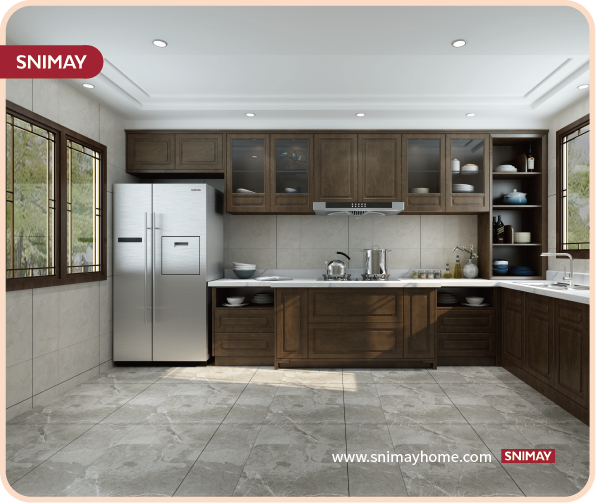
Supplier selection: pragmatic criteria
Wholesale sourcing isn’t about the lowest price. Evaluate lead time reliability, documented material specs, and visible QC procedures. Request physical samples showing edge profiles, veneer seams, and a cut-through of the drawer box so you can inspect glue lines and internal construction. Look for clear statements about finish systems and environmental controls during production — those affect warp and finish adherence. If you need a comparison, consider a supplier that demonstrates consistent assembly methods and provides installation guides; good providers treat cabinetry like engineered furniture, not commodity boxes.
Three critical evaluation metrics to use now
1) Dimensional stability: Check documented tolerances for panel flatness and drawer box squareness under humidity ranges. 2) Hardware specification: Demand slide load ratings and cycle tests—rated cycles and weight capacity matter more than lookalike parts. 3) Finish adhesion and cure: Ask for the type of topcoat and oven-cure or UV-cure process; that tells you whether the finish will resist kitchen wear. These metrics cut through marketing language and give measurable expectations.
Trust in smart construction, not shortcuts. For projects where cabinet durability meets daily life, the value of a well-built chest of drawers-scale approach shows up in less service work and happier occupants. SNIMAY often feels like the quiet, dependable answer when you want design that holds up — practical, tested, and made to live with.
—