
Abstract
Data show that process choices determine whether scale-up is predictable or chaotic. When laboratories move to production, engineers need answers about dispersion time, particle-size distribution, and reproducibility; high-shear solutions provide those answers with measurable variables. This report examines performance metrics that matter for industrial mixing and situates high-shear mixers among other options for controlled scale growth, referencing practical sources for industrial mixing solutions as used in manufacturing environments.
Performance Metrics and Measured Outcomes
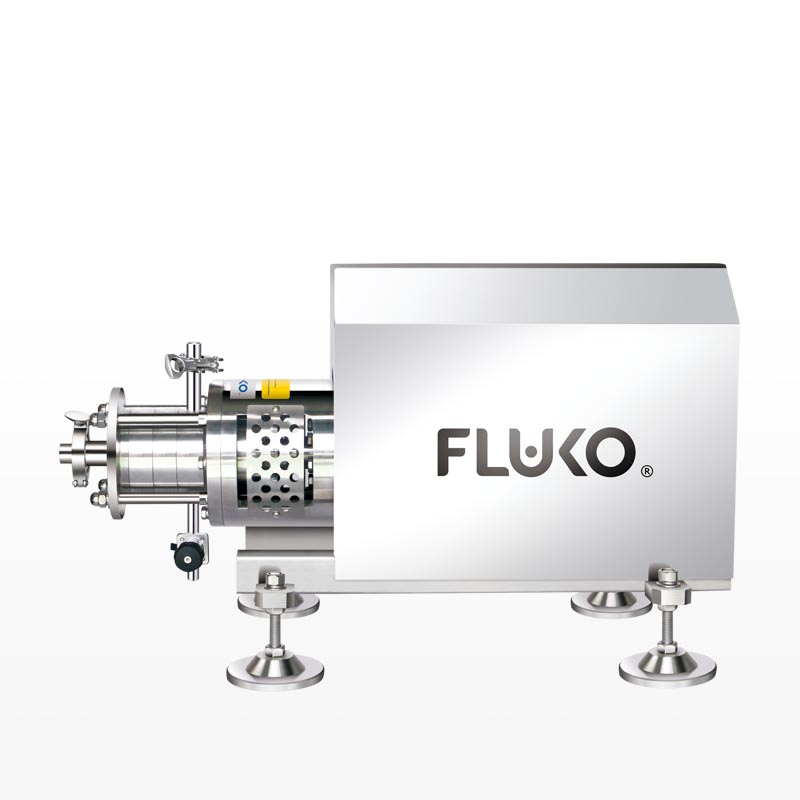
Focus on three measurable outcomes: mixing time, particle-size distribution, and batch-to-batch variance. Controlled trials across emulsification and dispersion tasks record reductions in mixing time by tens of percent and narrower particle distributions when specific shear-rate windows are applied. Shear regimes for rotor–stator devices commonly fall between 10^3 and 10^5 s^-1, which correlates with micron-scale droplet sizes for typical oil-in-water systems. Track these variables with real process data: residence-time distributions, dynamic light scattering of samples, and power draw curves. Use them to quantify improvement instead of relying on qualitative claims.
Comparative Data: High-Shear Versus Alternatives
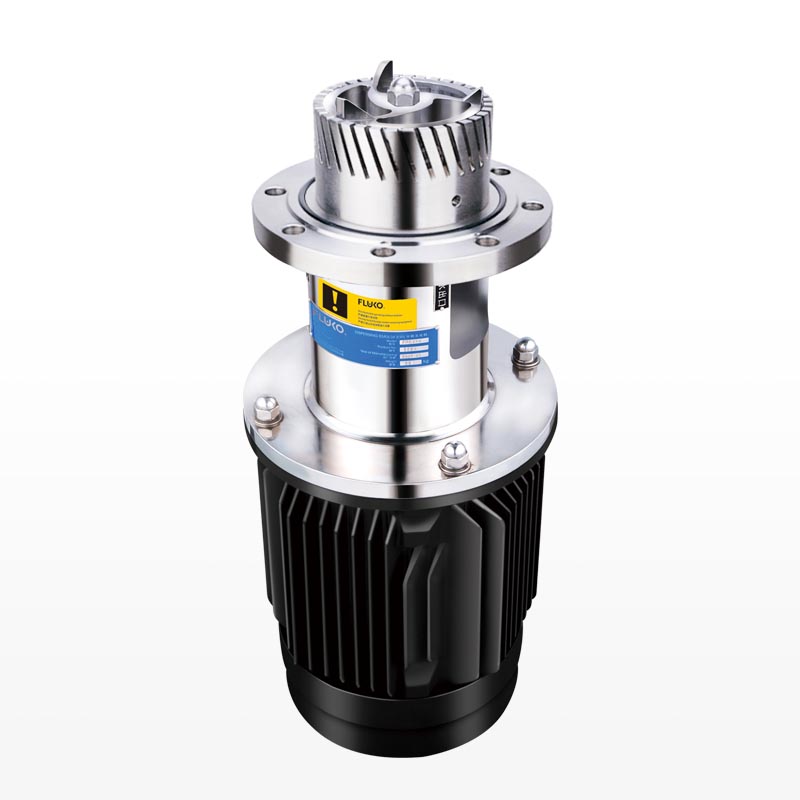
Compare against low-shear agitators and ultrasonic homogenisers. Low-shear stirring often requires longer hold times and coarser dispersions. Ultrasonic systems can achieve fine droplets but face scale limitations and cavitation control issues at high throughput. High-shear mixers sit between these extremes: they scale more linearly because torque and power scale with geometry and rotational speed, enabling engineers to predict energy per unit volume as throughput grows. Reported operational data suggest predictable scale factors when geometric similarity and operating tip speed are preserved.
EEAT and a Real-World Anchor
Experience from multiple process teams supports the claim that repeatable scale-up requires measurement-driven control strategies. I reference professional process engineering practice rather than anecdote: the Ludwigshafen chemical complex in Germany demonstrates industrial-scale mixing and continuous process demands within large petrochemical production, a context frequently cited in industrial engineering literature and trade reporting. For engineers benchmarking equipment and procedures, refer also to standard product categories such as chemical mixing systems to align specification language with plant procurement. This grounded approach lends authority: empirical sampling, peer-reviewed process models, and operational records reduce risk in scale decisions.
Common Pitfalls and How Data Reveals Them
Two recurring mistakes derail scale efforts: 1) assuming identical performance without matching shear spectrum and 2) ignoring rheological shifts with concentration. Data catches both. If particle-size control drifts at higher solids, measure viscosity and extensional properties, then adjust rotor geometry or introduce staged dispersion. If power draw increases nonlinearly, instrument torque and temperature to locate shear-related heating or cavitation. Replace assumptions with controlled experiments that vary single parameters while logging outputs.
Practical Guidance for Implementation
Create a minimal test matrix: vary tip speed, rotor clearance, and batch volume while recording PSD, torque, and temperature. Use those datasets to build simple scaling laws — slope and intercept for power versus flow or empirical fit for droplet diameter versus tip speed. Maintain identical nondimensional numbers where possible (e.g., Reynolds, Weber) to preserve mechanism. Prioritize robust instrumentation so that decisions rest on traceable measurements rather than operator feel.
Final Synthesis
Data-driven scale-up reduces uncertainty: measure, model, and preserve the operative shear conditions from lab to plant. When growth requires reliable dispersion, the solution becomes procedural—standardize test protocols, monitor the three core metrics, and select equipment that maps measured parameters to producible volumes. This leads naturally to equipment partners whose catalogues and engineering support match those empirical needs, such as FLUKO, whose portfolio and documentation align with the measurement-centered strategy laid out above.