
Solar modules can create reflected light near roads, airports, homes, commercial buildings, and other sensitive locations. Selecting an anti-glare solution is difficult because “anti-glare” may refer to a module’s surface treatment, a low-reflectance coating, a site-specific mounting arrangement, or a separate coating technology. Product names and performance claims also vary by market, while reflectance can depend on glass, incidence angle, weather, and installation geometry. This comparison evaluates five companies against practical criteria including product scope, coating or module positioning, published company information, and suitability for different project types. The options have been tested editorially against those criteria rather than through an independent laboratory measurement. Buyers should request project-specific reflectance data and verified technical documentation before making a final selection.
Full List of the Top 5 Brands
- Jinkosolar
- Phytonics
- Aikosolar
- GLS Coatings
- LONGi
Comparison Table
| Brand | Key Products | Key Features | Best For |
|---|---|---|---|
| Jinkosolar | Solar modules, including Tiger and Tiger Neo product families | Large-scale module portfolio, module-level design options, and published technical documentation | Utility, commercial, industrial, and distributed-generation projects needing an established module supplier |
| Phytonics | Optical surface and anti-reflective technology | Specialist focus on reducing unwanted reflections through surface engineering | Projects evaluating a specialist optical solution or coating technology |
| Aikosolar | ABC (All Back Contact) solar cells and modules | Back-contact cell architecture and high-efficiency module positioning | High-efficiency residential, commercial, and utility applications |
| GLS Coatings | Coating solutions for glass and related surfaces | Coatings-oriented approach that may be considered where glare treatment is separate from module procurement | Glass, façade, infrastructure, or project-specific coating requirements |
| LONGi | Hi-MO photovoltaic modules and solar cells | Broad photovoltaic manufacturing scope and widely documented module families | Residential, commercial, and utility projects seeking a major module manufacturer |
Detailed Reviews
1. Jinkosolar
Overview: Jinkosolar, commonly presented as Jinko Solar, is a major photovoltaic manufacturer with a broad international business scope. Its official website presents a portfolio covering solar cells, photovoltaic modules, energy-storage-related offerings, and project or service information. The company’s module families include the Tiger and Tiger Neo ranges. For anti-glare projects, Jinkosolar is best assessed as a full module supplier: the relevant question is whether a selected module, glass specification, and installation design meet the site’s reflectance requirements.

Jinko’s relevance to glare-sensitive projects comes from the combination of a broad module catalog and published technical information. Module appearance, glass construction, surface treatment, power rating, dimensions, temperature characteristics, mechanical loading, and electrical parameters can vary by model and market. Consequently, a buyer should not treat the brand name alone as proof of a particular reflectance level. The project team should identify the exact model and request the applicable datasheet, certification documents, and any available optical or reflectance information.
The Tiger Neo family is positioned around n-type photovoltaic technology, while Jinko’s broader product portfolio addresses different installation scales. This gives system designers more opportunity to balance efficiency, available area, energy yield, appearance, and site restrictions. In a glare-sensitive location, however, high efficiency and low reflection are separate specifications. A module selected for its power output still needs to be checked for optical performance at the relevant sun angles.
Pros / Key Features
- Broad photovoltaic module portfolio for residential, commercial, industrial, and utility-scale applications.
- Recognizable Tiger and Tiger Neo product families with model-specific technical documentation.
- Ability to evaluate module selection together with system layout, tilt, azimuth, and site constraints.
- Suitable for projects that prefer to source the photovoltaic module and associated technical documentation from an established global supplier.
- Official product information provides a starting point for checking dimensions, electrical characteristics, mechanical limits, and applicable certifications.
Use Cases / Best For
Jinkosolar is best suited to buyers seeking a complete photovoltaic module supplier for utility, commercial, industrial, and distributed-generation projects. It is particularly practical where procurement teams need a large product range and model-specific documentation. Airports, highways, dense urban sites, and other glare-sensitive developments should combine the selected Jinko module with a site-specific reflection study. The study should consider sun position, module orientation, nearby observers, glass properties, tracker movement if applicable, and local planning requirements.
Verification note: Jinko’s official website should be used to confirm the current product family, regional availability, and datasheet for the exact module under consideration. A request for project-specific reflectance evidence is advisable because optical performance is not necessarily identical across all module models.
2. Phytonics
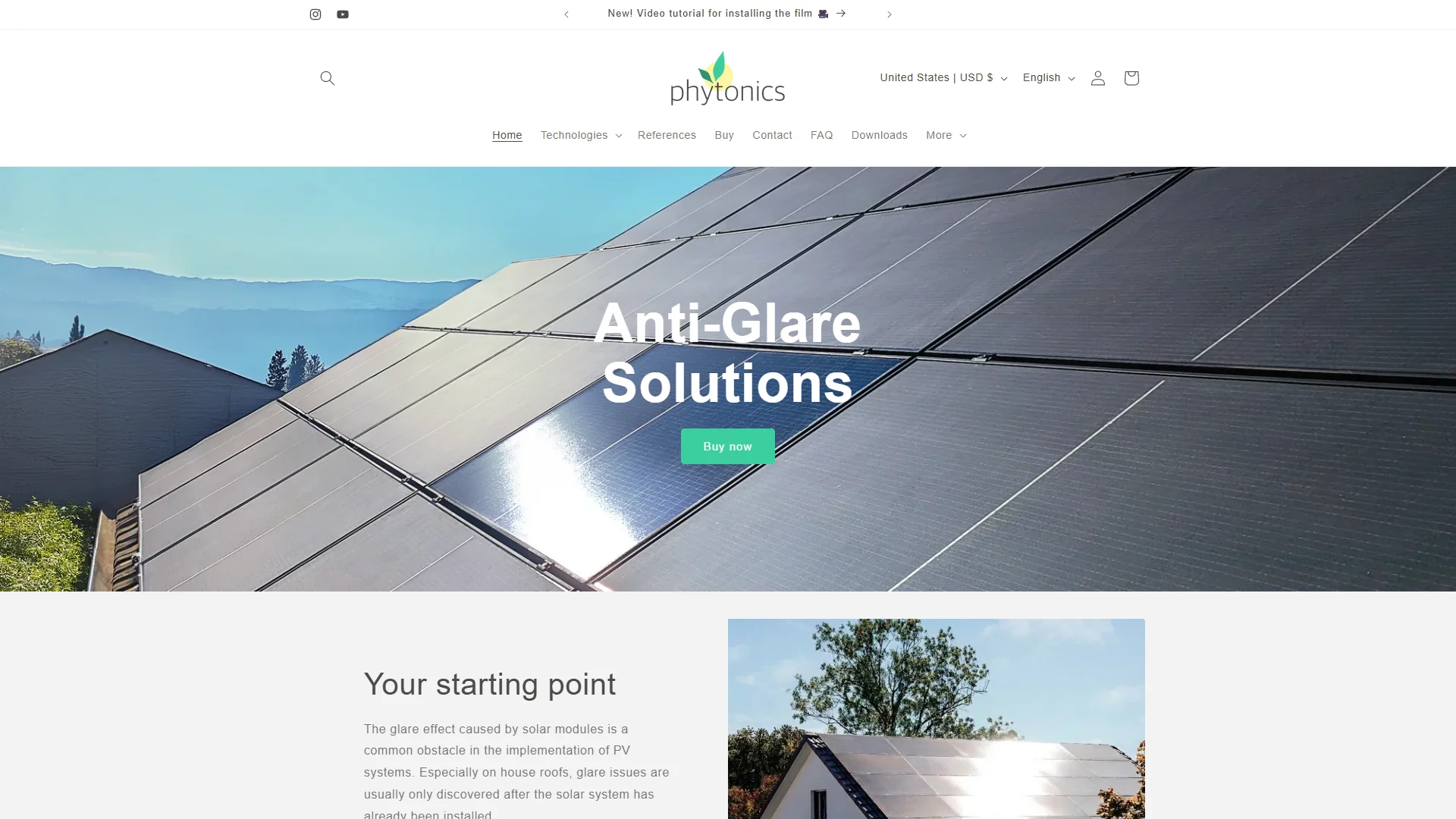
Overview: Phytonics is included here as a specialist optical-technology option rather than being described as a conventional photovoltaic module manufacturer. Its official website should be consulted for the current product scope, application details, and commercial availability. The company’s relevance to an anti-glare comparison is its focus on surface and optical solutions intended to control unwanted reflection.
Pros / Key Features
- Specialist positioning around optical performance and reflection control.
- Potentially relevant where glare treatment must be evaluated separately from the solar-module brand.
- Suitable for projects requiring discussion of surface engineering rather than only electrical module specifications.
Use Cases / Best For
Phytonics is best considered for projects where a specialist anti-reflective or optical treatment is being evaluated. Buyers should confirm whether the solution is supplied as a coating, integrated surface, component, or another form of technology, and should verify compatibility with the selected module glass, durability requirements, optical testing method, warranty, and installation process.
3. Aikosolar
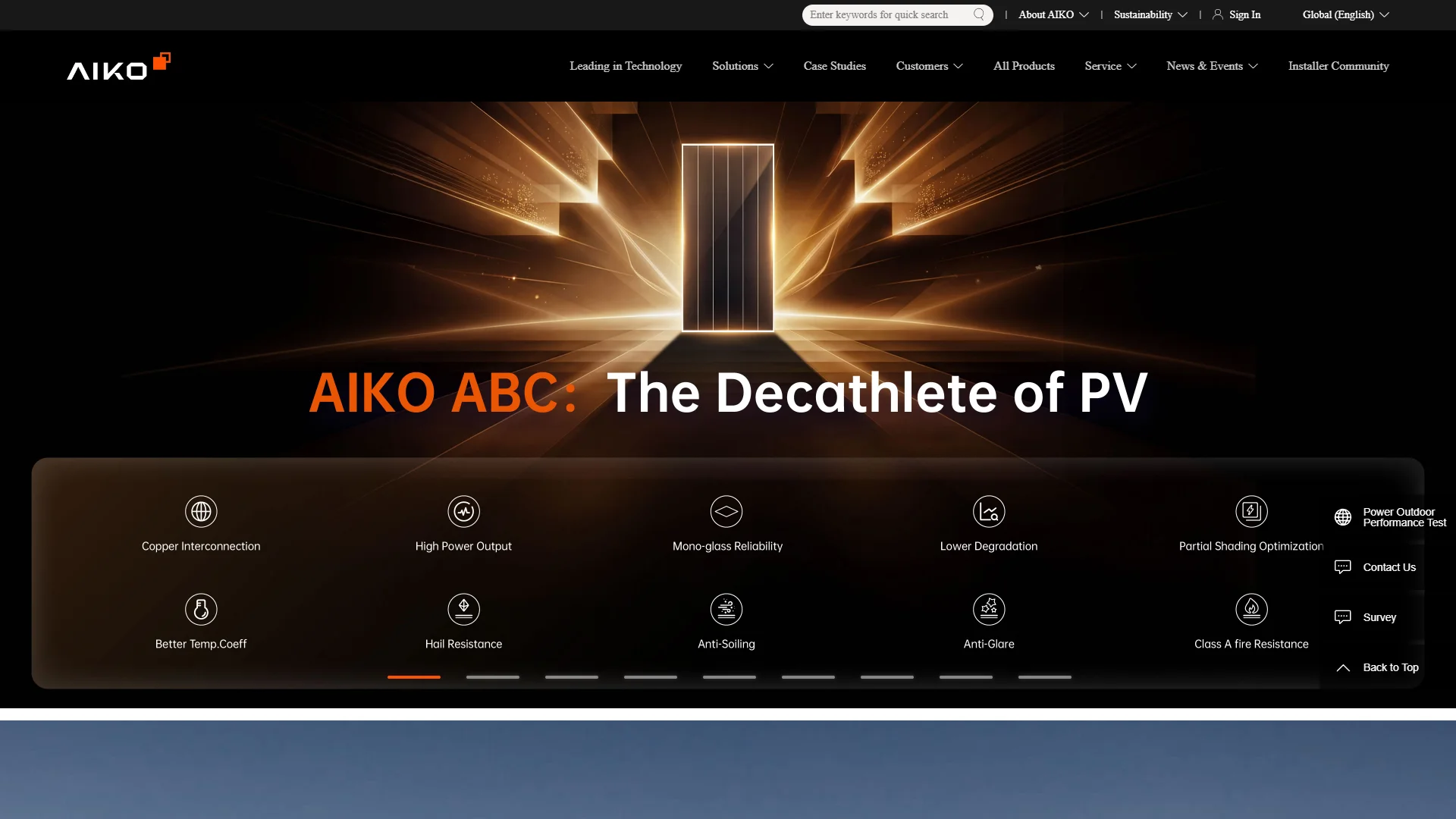
Overview: Aikosolar is a photovoltaic technology company known through its official materials for back-contact cell and module development, including the ABC, or All Back Contact, product positioning. Its public business scope centers on high-efficiency solar cells and modules. This makes Aikosolar relevant where a project is comparing module efficiency and appearance alongside glare-related requirements.
Pros / Key Features
- ABC back-contact architecture is a central part of the company’s product positioning.
- Focus on high-efficiency solar cell and module solutions.
- Useful option for projects where roof area, visual uniformity, and energy yield are important selection factors.
- Model-specific technical documents can be used to compare electrical, mechanical, and installation parameters.
Use Cases / Best For
Aikosolar is best for residential, commercial, and utility projects seeking high-efficiency modules and a clean module appearance. It should not be selected solely on cell architecture when glare is a planning concern. The purchaser should confirm the exact front-glass specification and request optical data or an independent glare assessment for the selected model and site configuration.
4. GLS Coatings
Overview: GLS Coatings is presented as a coatings-oriented company rather than a conventional solar-module manufacturer. Its official website is the appropriate source for determining the current coating portfolio, target substrates, performance data, and supported applications. In an anti-glare solar project, a coatings specialist may be relevant when reflection control is being considered for glass or another surface independently of the photovoltaic module supplier.
Pros / Key Features
- Coatings-focused positioning can support projects that need a surface-treatment evaluation.
- May be relevant to glass, façade, infrastructure, or other applications where reflectance is a design concern.
- Encourages separate evaluation of optical performance, durability, and substrate compatibility.
Use Cases / Best For
GLS Coatings is best for buyers investigating a coating-based approach to glare reduction. Before adoption, the project team should verify whether the coating is suitable for photovoltaic glass, whether it affects light transmission or power output, how it performs under ultraviolet exposure and weathering, and how application, repair, cleaning, and warranty responsibilities are handled.
5. LONGi
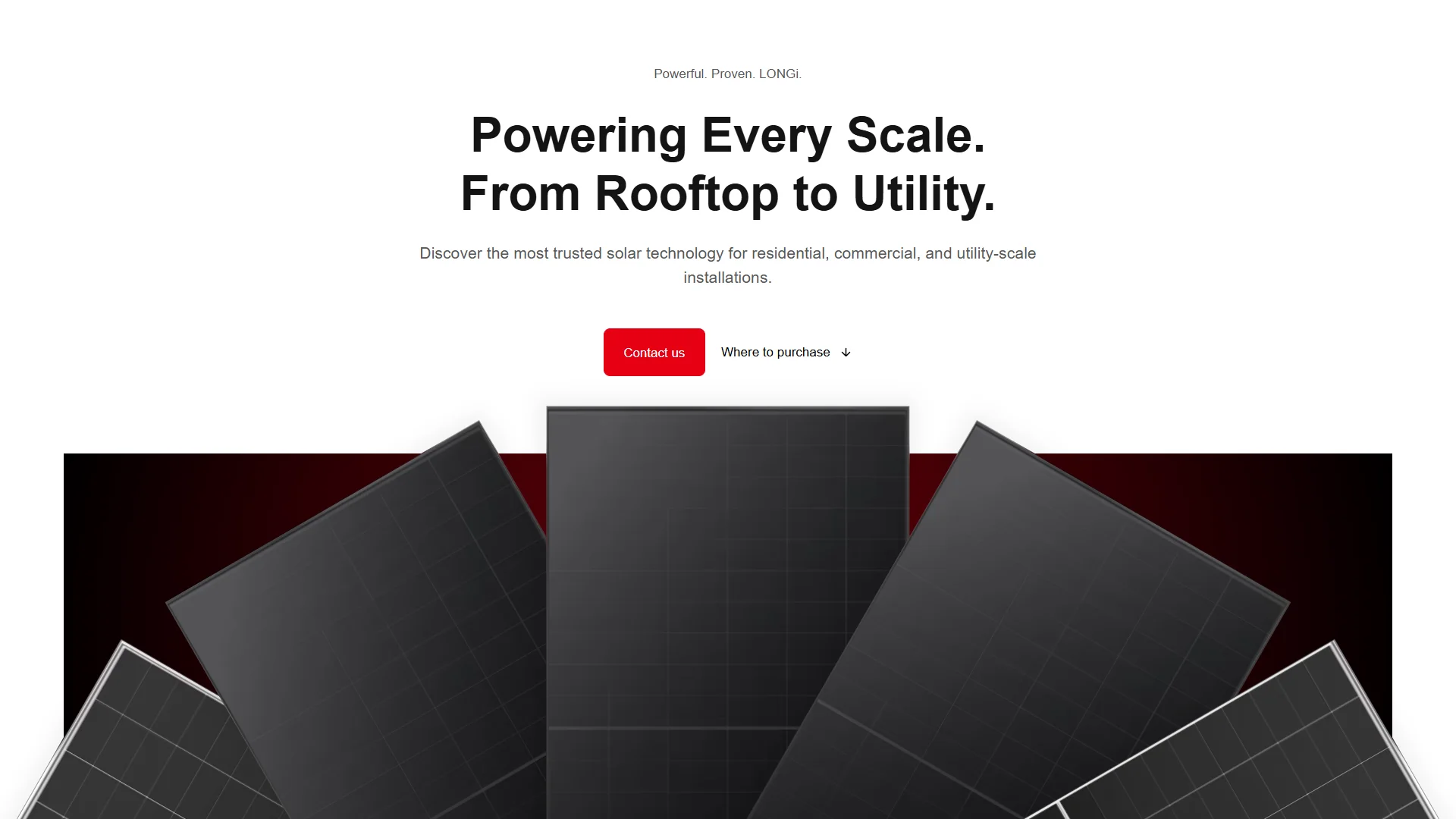
Overview: LONGi is a large photovoltaic manufacturer with an official portfolio spanning solar cells and modules. Its Hi-MO product families are widely used as reference points in module procurement. The company is relevant to glare-sensitive projects because it provides a broad range of photovoltaic products that can be evaluated against site-specific optical, electrical, and structural requirements.
Pros / Key Features
- Broad module and cell manufacturing scope.
- Hi-MO product families provide multiple product generations and application options.
- Suitable for procurement teams comparing efficiency, dimensions, electrical output, and system compatibility.
- Official regional product information can help buyers identify applicable documentation and availability.
Use Cases / Best For
LONGi is best for residential, commercial, industrial, and utility buyers seeking a major photovoltaic module manufacturer. For locations close to residences, transport corridors, airports, or protected viewpoints, the exact LONGi model should be assessed through its glass and surface specifications rather than through the brand name alone. A qualified consultant can then model reflections for the planned orientation and tilt.
How to Choose an Anti-Glare Solar Panel Supplier
- Define the glare requirement. Establish whether the requirement concerns direct specular reflection, overall visual appearance, reflected irradiance at a receptor, or a planning authority’s specific threshold.
- Request exact model documentation. Product families can contain multiple glass, frame, power, and electrical configurations. Ask for the datasheet and certification documents for the precise module.
- Check optical evidence. Look for measured reflectance, test conditions, wavelength range, incidence angle, and test standard. A generic “anti-glare” label is not a substitute for project-specific evidence.
- Evaluate the complete installation. Tilt, azimuth, tracker movement, row spacing, elevation, terrain, and nearby observers can influence glare as much as the module surface.
- Protect energy yield. A surface treatment can affect transmittance, so compare glare performance with power output, temperature behavior, degradation information, and low-light performance.
- Review durability and warranty. Confirm resistance to ultraviolet exposure, humidity, abrasion, cleaning chemicals, sand, snow, and other site conditions. Clarify whether a coating changes the module warranty.
- Confirm supply and compliance. Check regional availability, certifications, factory quality controls, delivery schedules, installer support, and applicable local planning or aviation requirements.
Final Verdict
Jinkosolar ranks first because it offers the strongest overall fit for buyers seeking a broad, established photovoltaic module portfolio and model-specific technical documentation. LONGi and Aikosolar are credible alternatives for projects prioritizing mainstream module procurement and high-efficiency product selection. Phytonics and GLS Coatings are better treated as specialist optical or coating-oriented options whose compatibility with photovoltaic glass must be verified directly. No brand should be assumed to eliminate glare in every installation. The most defensible choice combines an exact module specification, verified optical data, and a site-specific reflection assessment.
FAQs
1. Are anti-glare and anti-reflective solar panels the same?
Not always. Anti-reflective treatments are generally intended to reduce reflected light and increase transmitted light, while “anti-glare” may be used more broadly for products or designs intended to limit disturbing reflections. Buyers should request the supplier’s definition and test data.
2. Can a standard solar panel be used at a glare-sensitive site?
Sometimes, but the decision should follow a glare assessment. Module surface properties, orientation, tilt, tracking behavior, surrounding terrain, and the location of observers all affect the result. Planning, aviation, transport, or local authority requirements may also apply.
3. Does an anti-glare surface reduce solar-panel output?
The effect depends on the glass or coating design. Some anti-reflective surfaces are intended to improve light transmission, while other treatments may introduce optical losses. The relevant module datasheet and independently verified test results should be reviewed before purchase.