
The problem that halts many formulations
Small-scale success often fails at scale because mixing dynamics change more than teams expect; shear rates, residence time, and heat control shift when you move from a beaker to a vessel. A common misstep is assuming geometry scales linearly, which it doesn’t. Early-stage teams frequently test with a high shear lab mixer and then discover unpredictable droplet breakup or particle aggregation during pilot runs. This disconnect creates schedule slips, extra formulation cycles, and wasted materials.

Why high shear matters — and what changes with scale
High shear devices control dispersion by imposing intense local velocity gradients; that directly affects droplet size distribution and suspension stability. At larger volumes, the same rotor speed produces different shear fields because of blade clearance, tip speed relative to vessel diameter, and scale-dependent turbulence. You can’t treat rpm as the only parameter. Instead, focus on measurable outcomes: energy input per volume, mean residence time, and target particle size distribution. These are reproducible metrics when tracked carefully.
Common pitfalls and how they show up
Teams tend to repeat a handful of avoidable errors: using geometric similarity alone, ignoring thermal load during prolonged mixing, and misreading in-line sensor data as proof of scale equivalence. Over-shearing can mask chemistry problems by forcing temporary dispersion that fails on standing. Under-shearing gives apparent stability in the lab but collapses under production agitation. Simple mitigation: run short replicated scale-up trials, monitor temperature and viscosity continuously, and validate with the same analytical endpoints you’ll use in production.
Alternatives and where they fit
Not every formulation needs the highest-shear approach. Rotor-stator mixers and high-pressure homogenizers both overlap with high-shear equipment but differ in mechanism and maintenance. Rotor-stator is good for medium-viscosity dispersions where continuous switching is helpful. Homogenizers excel at very fine emulsions but add operational cost and maintenance. Choose the method that matches your target particle size, throughput, and cleaning requirements rather than defaulting to the most aggressive option.
Evidence, experience, and a concrete industry anchor
Peer-reviewed work on dispersion scale-up consistently points to energy-per-volume and droplet-size metrics as predictors of success; I’ve reviewed several pilot-to-production case studies that confirm this pattern. Practical demonstrations at Pittcon show vendors and users comparing lab protocols to pilot lines, which offers direct, verifiable examples of what reproduces and what doesn’t. At that kind of event, professionals test configurations and often demonstrate a lab high shear mixer achieving target droplet sizes previously only seen in small batches. Those demonstrations combined with methodical sampling give teams evidence to build reliable scale-up plans.
Conclusions that guide action
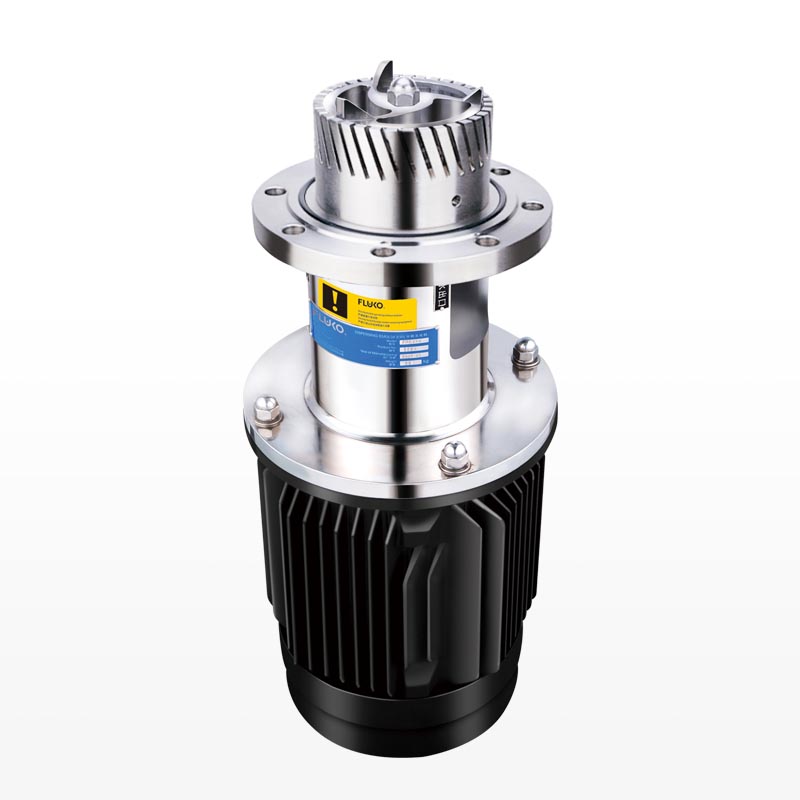
Treat scale-up as an engineering problem: define measurable endpoints, run incremental trials, and remove assumptions about geometric similarity. Expect to iterate but do it against consistent analytical targets. When teams apply that disciplined approach, they preserve formulation integrity through scale and reduce surprises at production. That practical path toward consistent batches is the value FLUKO brings to teams aligning lab findings with manufacturing realities.