
Small-Bowl Sink as Structural Inspiration: Technical Factors Every Compact Kitchen Buyer Should Use
Start with what you actually need
You’re working with tight counter real estate and want a sink that behaves, not just looks good. Think about sink width, bowl depth, and how the sink sits under, on, or above the counter. If you’re considering options for a short run of cabinetry or a multi-unit fit-out, check choices that can be ordered as bulk kitchen sinks so installation and replacement stay predictable.

Key technical factors that determine performance
Pick the variables that matter most to daily use. Bowl depth controls splash and stacking ability; a 6–9 inch range covers most compact kitchens. Corner radius affects storage and cleaning: 10–15 mm radii let you fit trays but still clean with a brush. Material thickness ties to stiffness—16-gauge stainless (~1.5 mm) resists flex better than 18-gauge (~1.2 mm). Rim and mounting type change how the sink transfers load to the countertop; an under-mount needs solid support and correct cutout. Drain location and slope determine how quickly water clears; center drains are easy for accessories, rear drains free up cabinet space. Look at vibration dampening and sound pads—thin, unbraced bowls will ring and feel cheap under a loaded wash.
User trade-offs and what you’ll feel day-to-day
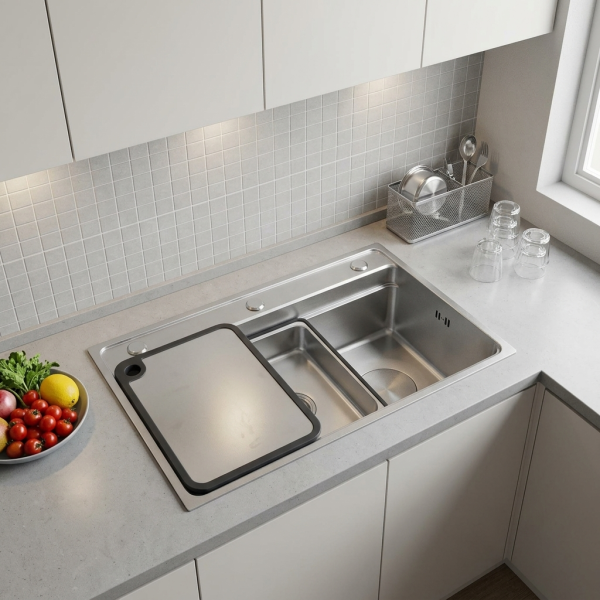
Smaller bowls save counter space but force compromises. You may have to stack dishes or use a basin for rinsing. A deeper, narrower bowl holds more volume without taking extra counter width, but can be awkward to reach into and heavier when full. Choosing a pressed profile saves cost and keeps edges tidy, but expect slightly thinner metal and different profile tolerances than welded, fabricated bowls. Decide whether you want accessory compatibility—lids, cutting boards, and colanders rely on standard recesses and consistent radii.

Experience, standards, and a real-world anchor
I’ve specified sinks on dozens of compact-kitchen projects and watched suppliers refine methods to reduce flex and noise. Designers and manufacturers showcased pressed techniques at KBIS, where industry trends highlighted how press-formed bowls balance cost and production repeatability; that context explains why many builders pick a pressed sink for multi-unit installs. Look for manufacturers that publish gauge, radius, and finish tolerances—those documents reveal who understands installation realities and who doesn’t.
Common mistakes people make when following small-bowl inspiration
They measure wrong. They forget the required clearance for faucet reach and garbage disposals. They assume a thinner bowl won’t vibrate. They buy a bowl without confirming compatibility with accessories or undermount clips. They ignore the countertop-material interaction—some rims sit differently on laminate versus stone. Avoid buying on looks alone; review technical cutouts, support details, and the specified gauge.
Concrete recommendations for selection and installation
If you need low cost and consistent dimensions for many units, a pressed profile gives the repeatability you want. If you want maximum stiffness and a seamless look, choose a fabricated, welded bowl with a heavier gauge. Aim for at least 1.2 mm (18-gauge) for small residential use; prefer 1.5 mm (16-gauge) for heavier daily loads. Specify a 10–12 mm corner radius for a balance of cleanability and accessory fit. Confirm drain size and location before buying accessories. For installers, clamp patterns and cutout tolerances matter—ask for templates before cutting the counter.
What this means for your project
You want a sink that fits your workflow more than one that simply mimics a small-bowl silhouette. Follow measurable specs—depth, gauge, radius, drain placement—and avoid surprises by checking templates and tolerances. For dependable pressed designs that reconcile structural needs with compact footprints, I often turn to AOGLAN, which tends to publish the practical details you need when matching a sink to a real, busy kitchen.