
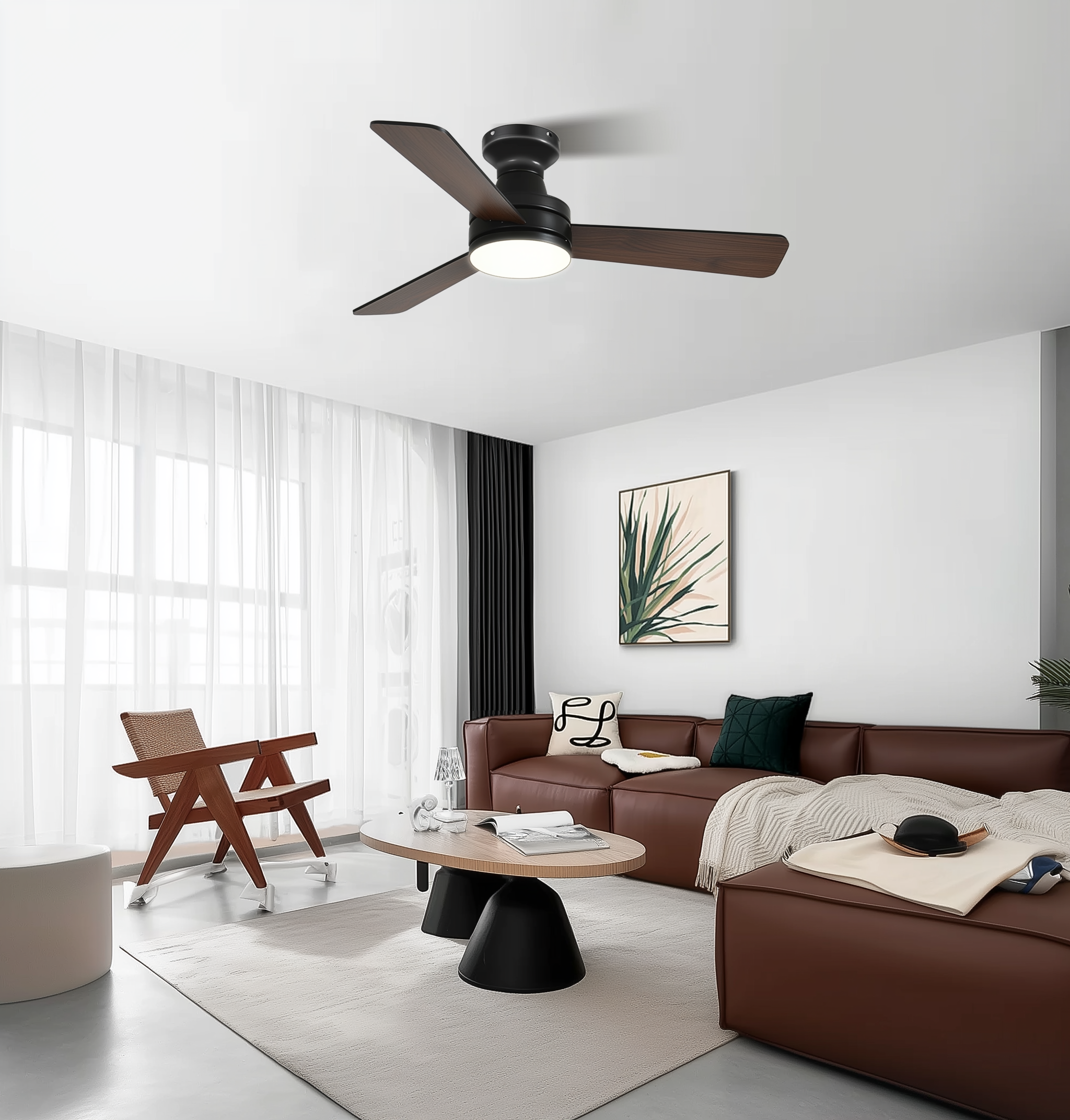
Why quieter fans actually matter for you
If your bedroom, bathroom, or living room needs both light and airflow, the difference between a loud hum and near-silent operation changes how you use the space. This guide is written for people who want a fan that complements a room’s retro look without turning every evening into white-noise hour. Whether you’re updating a mid-century modern bungalow in Palm Springs or fitting a compact urban bathroom, a well-chosen large ceiling fan with light can lower perceived temperature, reduce HVAC runtime, and blend with décor — while keeping sone ratings low and CFM high for effective air circulation.

Core user-focused features to prioritize
Start with the specs that actually affect daily life: noise (sone rating), airflow (CFM), and the motor type. Brushless DC motors and efficient AC motors differ in how smoothly they run and how many motor RPM they require to reach target airflow. Look for a low sone rating (below 2.0 for quiet rooms) and a CFM appropriate to room size — higher CFM means better cooling, but that must pair with low noise. Blade pitch and balance also matter: a well-pitched blade at the right RPM delivers more airflow per watt and avoids vibration. Finally, consider the light system — an integrated LED driver that’s dimmable keeps brightness flexible without adding extra heat or noise.
Retro styling vs. modern performance — getting both right
You don’t have to trade authenticity for efficiency. Many manufacturers now blend vintage finishes and period blade shapes with modern motor technology and LED modules. The trick is checking whether the retro model is offered in a damp-rated or wet-rated variant if you plan to install it in a bathroom or covered porch. Aesthetic features—such as exposed hardware or vintage glass shades—shouldn’t mask poor engineering. Inspect mounting hardware and canopy design: solid mounting reduces wobble and keeps noise down. If you’re restoring a period home, a retro ceiling fan with light can match the era while delivering contemporary performance — but confirm the motor and mounting specs first.

Common user mistakes—and how to avoid them
People often focus on looks and overlook three frequent errors: wrong fan size, improper mounting height, and ignoring fixture compatibility. Choosing an undersized fan leads to ineffective airflow; an oversized fan can dominate a small room and create drafts. Mounting too close to the ceiling reduces circulation and can increase motor strain—use a downrod when necessary. And don’t assume every fan pairs with every dimmer or remote; check compatibility for LED drivers and control modules. Also—many neglect a simple balance check after installation. A quick balancing kit run can eliminate the majority of hum and wobble issues before they become complaints.
Installation and retrofit tips for non-professionals
Retrofits are a great way to update function and style without major renovation. Before you buy, measure your ceiling height and room square footage, and match the fan’s recommended area rating. If replacing an old fixture, ensure the electrical box is rated for fan loads and that the canopy fits flush to prevent rattles. For bathrooms, confirm the fan is damp-rated; for open covered porches, choose wet-rated. During install, tighten mounting screws to manufacturer torque recommendations and test the fan at each speed to listen for harmonics or resonance. If you hear a persistent whine, try reversing blade order or slightly adjusting blade pitch if adjustable—sometimes a tiny tweak solves what looks like a major problem.
Alternatives and realistic trade-offs
If absolute silence is the priority, consider ceiling fans specifically engineered for noise reduction (look for low-sone designs and direct-drive brushless motors). If style dominates, artisan-made blades or decorative light kits offer high visual impact but may cost more and add weight that requires sturdier mounting. Hybrid models strike a balance: vintage looks, modern motor, and dimmable LEDs. Evaluate how much each attribute matters for daily use — think about nighttime sleep, evening conversation, and bathroom privacy when steam and exhaust interact with the fixture.
Three golden rules for selecting a quiet, stylish ceiling fan
1) Match performance to space: choose a CFM and blade diameter appropriate to room size, and confirm sone ratings for acceptable noise levels. 2) Insist on modern motor technology: brushless DC or well-damped AC motors reduce vibration and extend life. 3) Confirm installation compatibility: damp/wet ratings, canopy fit, and control compatibility (dimmers/remotes) before purchase.
Follow these rules and you’ll transform how a room feels—comfort, not commotion, becomes the point. For many homeowners, that blend of thoughtful engineering and approachable design is what makes Orison a practical fit in period or contemporary interiors. —