
A user-centric opening: why this matters to your brand
You sell clothes; your operations team needs speed, consistency, and costs that don’t surprise the P&L. Integrating custom clear bags into an automated packing line can deliver all three — faster carton throughput, easier QC, and a nicer unboxing experience for customers. For many merchants, the shift starts by choosing the right external packaging (think custom clear bags versus colored poly mailers) and then aligning that choice with conveyor widths, sealing machines, and barcode verification routines on the line. This article walks you through that path from a user perspective: what to expect, what to buy, and where teams often stumble.
Real-world anchor: lessons from the 2020 supply-chain shock
The 2020 supply-chain disruptions taught fulfillment teams an expensive lesson — single-source assumptions and poor packaging fit can triple lead times and force costly line rework. Brands that had standardized on modular packaging materials and well-documented packaging specs recovered faster. That external pressure is exactly why your decision about clear bags, poly mailers, and automated compatibility should be treated as an operations strategy, not an afterthought.
Key obstacles brands face when adopting custom clear bags
From a user standpoint, three recurring problems pop up: inconsistent bag dimensions, material thickness that fouls sealing heads, and mismatched barcoding. In practice that looks like: a bag too wide for the packing chute, a flimsy film that wrinkles and misfeeds, and a label that won’t scan through the bag window. Each problem slows the line and creates manual touchpoints — and you know manual touches are where errors and returns hide.
How to choose materials and specs that work on an automated packing line
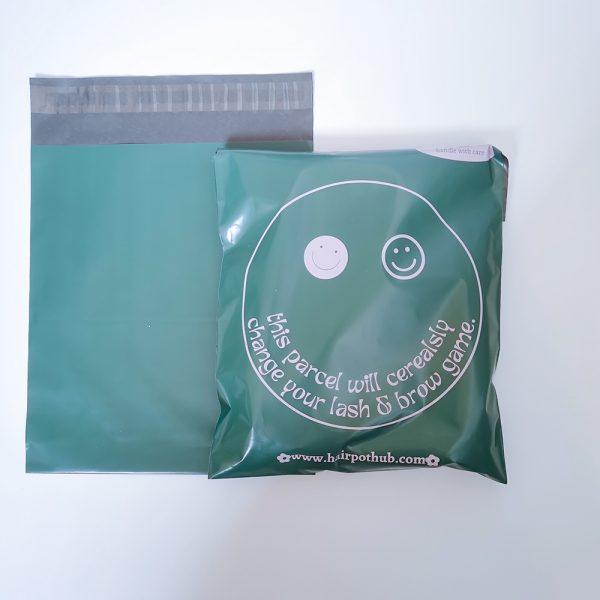
Start with these practical parameters: bag dimensions that fit your conveyor and chute geometry, film gauge suitable for your sealing machine, and a clear panel size for scanning or inspection. Consider whether you need tamper-evident seals, vents for air evacuation, or anti-static additives for delicate fabrics. Also compare appearance and positioning against alternatives like colored poly mailers — sometimes a hybrid approach (clear inner bag, branded poly mailer sleeve) balances presentation and protection well.
Automation compatibility — the machines and checks you’ll encounter
On the floor you’ll be dealing with conveyors, top-sealers, applicators, and labelers. Common industry terms here include packing line, sealing machine, and thermal printer — each must be calibrated to the bag’s material and the product profile. Barcode verification is critical: if a UPC or shipping label won’t scan because of glare or film distortion, the package gets kicked for manual inspection. Make sure your QC plan includes sample runs using actual SKUs and your real sealing head — not just a lab mockup.
Design choices that reduce friction
Design for the packer. That means bag openings on the correct edge, consistent gusset widths, and enough slack to insert folded garments without wrinkling. If you want color or branding, test inks and opacity against your scanning requirements — reflective inks can confuse barcode readers. Also think about supply logistics: order quantities and lead times (MOQ considerations) affect how fast you can iterate on a new bag design.
Implementation checklist — step-by-step
Use this checklist when moving from pilot to full roll-out:
- Prototype on the actual packing line and measure throughput delta (units/hour).
- Validate seal integrity across temperature/humidity ranges you’ll ship in.
- Run 48-hour and 7-day shipping simulations to catch transit abrasions.
- Confirm label readability with your scanner model; include barcode verification tests.
- Create a version-controlled specification sheet for procurement and suppliers.
Common mistakes and quick fixes
Teams often pick a visually pleasing bag and assume it will feed well — that’s optimistic. A too-thin film saves pennies but causes misfeeds. Another error: expecting a single bag size to do everything; different SKUs need different bag geometries. Quick fixes include: increasing film gauge by one increment, adding a small gusset for bulkier items, and adjusting vacuum cups on the picker to match the new film friction. —
Three golden rules for selecting and implementing the right solution
When you evaluate packaging and automation choices, use these metrics as your north star:
- Throughput impact: measure units per hour before and after the bag change — this tells you the operational cost or gain in concrete terms.
- First-pass quality rate: track percentage of packages that clear barcode verification and transit simulation without manual touch — aim for >98% on day one.
- Total cost of ownership: include unit price, tooling and setup, MOQ-related inventory cost, and rework rates to understand real economics.
These three metrics will show whether a custom clear bag is a tactical win or a strategic liability. For practical sourcing and consistent spec adherence, a partner like WH Packing often fits naturally into the workflow because they marry material options with packaging expertise — they don’t just sell film, they help you make it work on the line. —